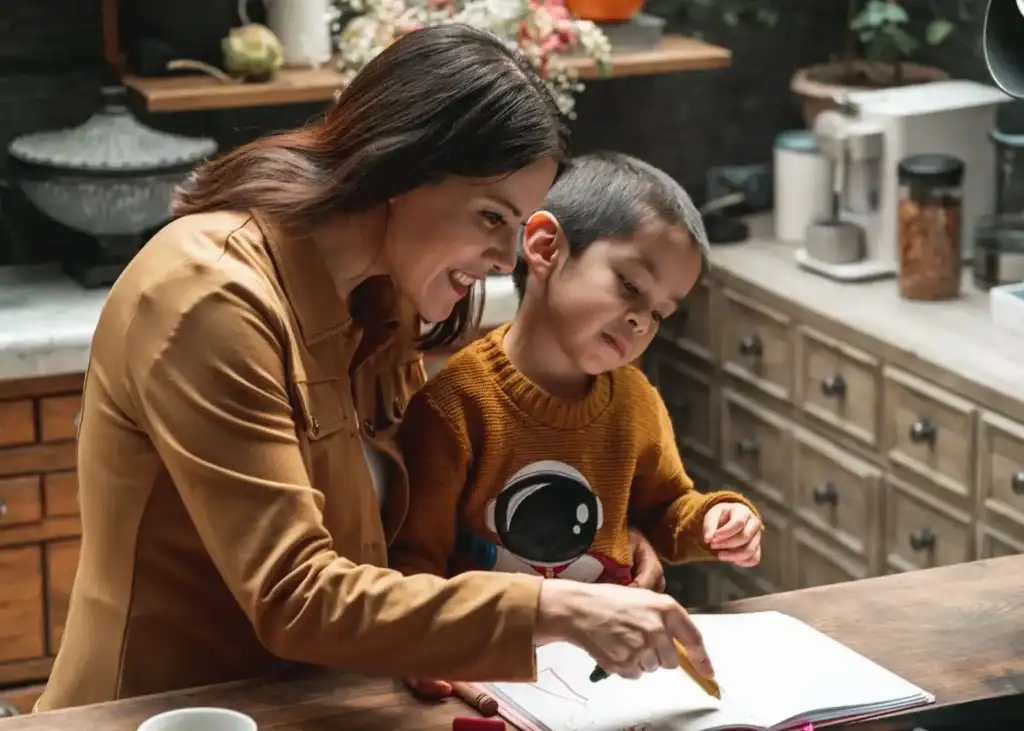
At HHBS, we provide individualised Applied Behaviour Analysis (ABA) therapy to help children develop new skills and improve behaviours that support their everyday lives. Our approach uses positive reinforcement and tailored strategies to help each child build communication, social, learning and daily living skills. We break down skills into small, manageable steps and adapt our therapy to suit each child’s individual needs.
Our ABA therapy services are designed for children with Autism Spectrum Disorder (ASD) Levels 1, 2 and 3, ADHD, and other conditions that affect your child’s behaviour and development.

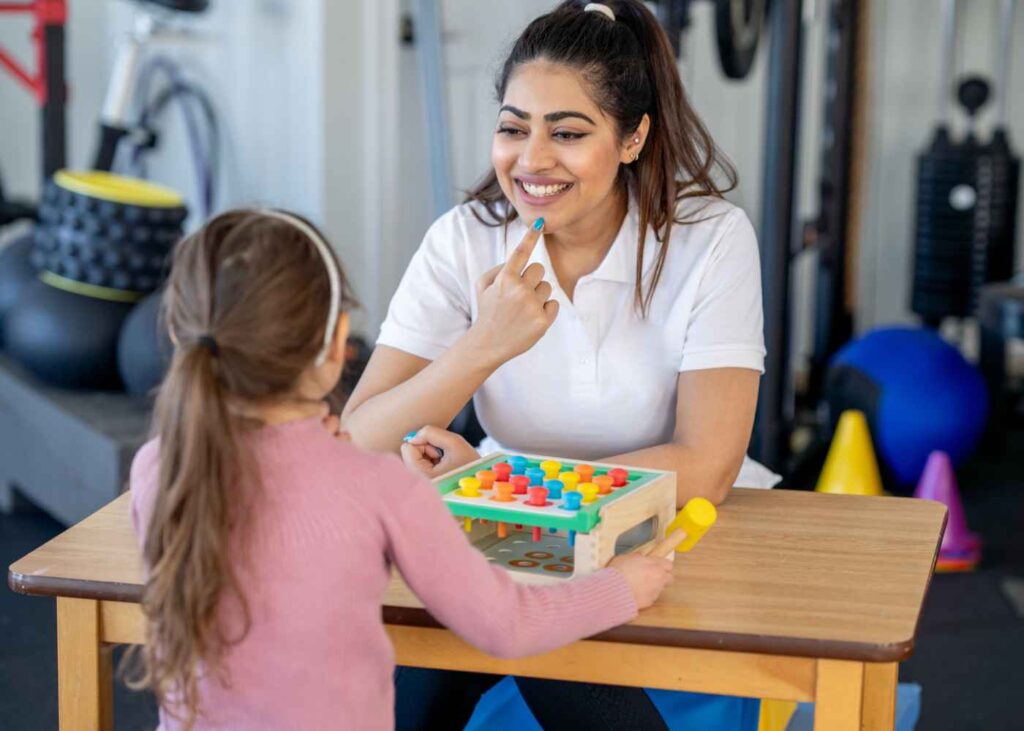
Applied Behaviour Analysis (ABA) is an approach to understanding how learning and behaviour are influenced by a person’s environment. It uses observation, assessment and individualised teaching strategies to support the development of practical skills.
For children, these skills may relate to communication, play, daily routines, learning and participation in everyday activities.
At HHBS, we believe therapy goals should mean something to your child and to your family. So we focus on building skills your child can actually use in everyday life, honouring what makes them individual, and making sure their wellbeing comes first at every step.
Every child has a different learning profile. We start by assessing your child’s strengths and needs, then build a plan around the communication, daily living, social and learning skills that matter most for them.
Children learn to express their needs, make choices and share information through speech, signs, pictures or communication devices.
Play based sessions give children the chance to explore play, join shared activities, take turns and build connections with other people where these are meaningful goals.
Everyday routines such as dressing, mealtimes, personal care and getting ready for the day are practised step by step with your child.
Useful tasks are broken into manageable steps and practised at a pace that suits your child.
Your child is supported to communicate preferences, ask for help and say no.
Skills are built so your child can take part in family, school and community routines.
We welcome referrals from support coordinators, families and other people involved in a participant's supports. Our team can discuss service availability, funding and the information needed to get started.
Our ABA therapists help your child build communication, daily living and social skills, reduce behaviours of concern, and carry those gains into home, school and community life.
ABA therapy is typically funded under Capacity Building – Improved Daily Living (Therapeutic Supports). It can also be funded under Early Childhood Intervention for children under 9.
ABA is data-driven, and so are we. We collect session-by-session data on every target skill and behaviour. Every 4 to 6 weeks we review progress, adjust the programme where the data shows it isn’t working, and use that data in the progress reports sent to your NDIS planner or support coordinator.
Yes. Caregiver training is a fundable Capacity Building support, and it’s built into how we work.
You are probably wondering what you are actually signing your child up for. So here is what a home session with us usually looks like.
We start with a greeting and a short transition activity so your child settles in and knows we have arrived. Then we move into a targeted skill building block, working on communication, social interaction or daily living, depending on what we are working on with your child.
Next comes play based learning. We practise the same skills through toys and games your child actually enjoys, because skills stick when they are practised in play, not just at a table.
If your child has behaviours of concern, we follow with a behaviour intervention segment. That might include visual schedules to reduce anxiety and improve task completion.
We finish with parent training and feedback. We show you what we practised and how to carry it into the week, so the learning does not stop when we leave.
We don’t believe any single therapy suits every child. Whether ABA is right for your child depends on their needs, preferences and goals, and on how the service is delivered. We’re always happy to have an initial conversation with you to explore whether HHBS is the right fit for your family.
Your family’s involvement can look like setting goals together, sharing information with us, observing activities that suit your child, and talking through ways to support agreed skills at home. How involved you are is up to you, and we shape it around what works for your child and your family.
Getting started with HHBS is simple. Call us on 0406 920 296, email admin@hhbs.com.au, or fill out our referral form and we’ll be in touch.
Our team is available Monday to Friday, 9 am to 5 pm. From there, we’ll guide you through the referral process, confirm your NDIS funding, and arrange an initial appointment with one of our behaviour support practitioners.