Mobile behaviour therapy is behaviour support delivered where the person lives, learns and spends their time, rather than at a centre. Our therapists travel to the home, childcare, school or community, work one-to-one with the participant in that setting, and coach the people around them to use the same strategies.
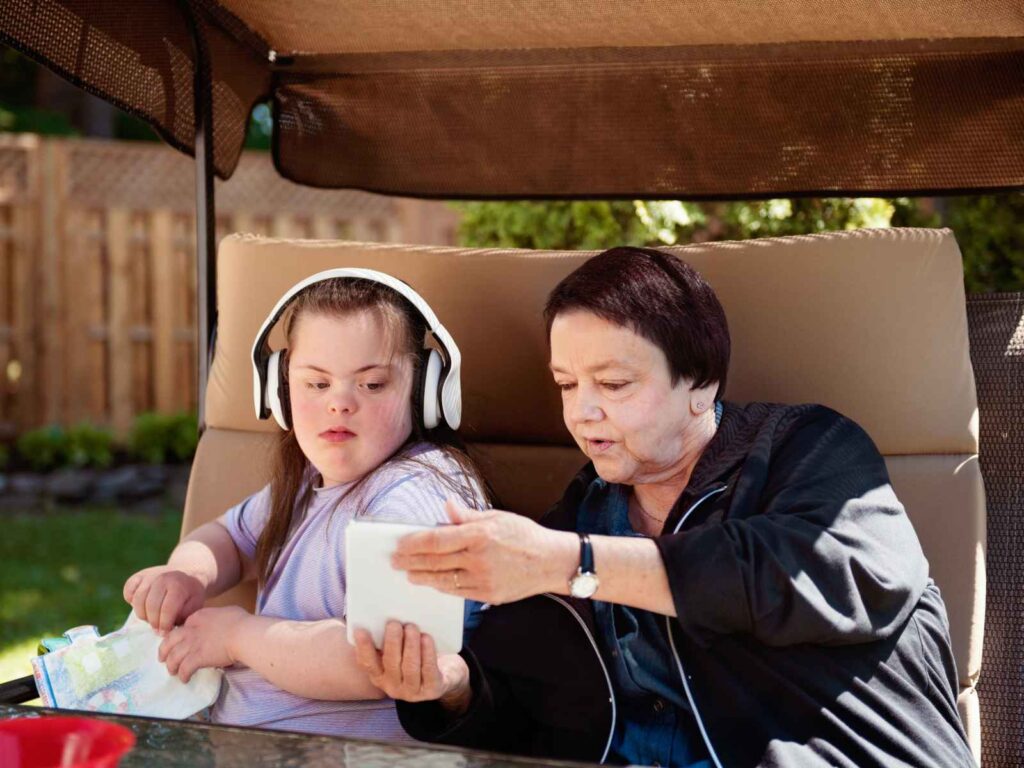
Behaviour therapy helps a person build skills and reduce behaviours that are unsafe or getting in the way of daily life. Mobile simply means the therapy comes to the participant.
A behaviour that only happens at home, at the shops or in a classroom is difficult to work on anywhere else. Behaviour is shaped by the setting it happens in: the noise, the routine, the demands, the people, the time of day. Working in that setting means your therapist sees what actually leads up to the behaviour, and the skills are taught in the place they need to be used.
It also removes practical barriers. There’s no travel for a participant who struggles with car trips or new buildings, no waiting room, and sessions can be scheduled at the time of day that’s hardest, rather than the time that suits a booking sheet.


We most often support people with autism (levels 1, 2 and 3), ADHD, global developmental delay and other developmental delays, and intellectual disability.
Our therapists can support with:
We start with two initial sessions, usually at home, to understand the participant's goals, daily routines and the behaviour you're concerned about. Where a behaviour is complex or unsafe, this includes a functional behaviour assessment: observing what happens before and after the behaviour to work out what it's doing for the person.
Your plan. We create a treatment plan setting out the goals, the skills we'll work on and the strategies to use when the behaviour happens. Where a behaviour support plan is needed, one of our Behaviour Support Practitioners writes it.
Your therapist runs one-to-one sessions in the agreed settings, teaching skills through everyday routines and activities rather than separate drills. We record what happens at every session so progress is measured, not guessed at.
Change holds when everyone responds the same way. We coach parents, carers, educators and support workers in the same strategies, and give your school or support team a copy of the plan if you want us to.
We analyse the data regularly, adjust what isn't working, and report on progress for your NDIS plan review.

Applied Behaviour Analysis is the science behind how behaviour is learned and how new skills are taught: breaking a skill into steps, practising it, and reinforcing the person’s effort so it sticks.
Positive Behaviour Support applies those principles inside a human rights framework. It focuses on quality of life, changing the environment around the person, teaching replacement skills, and reducing and eliminating restrictive practices. It’s the approach the NDIS Quality and Safeguards Commission regulates, delivered by practitioners registered under the NDIS Positive Behaviour Support Capability Framework.
Most of our programs use both: PBS for the assessment, plan and safeguards, ABA for how skills are taught session to session.
A Behaviour Support Practitioner is registered under the NDIS Positive Behaviour Support Capability Framework. They do the assessment, write the behaviour support plan and check how it’s working at each review. A behaviour therapist runs the sessions with your child, following that plan and supervised by the practitioner. Most families work with both: the practitioner decides what to do, the therapist does it week to week, and they talk to each other about what’s changing.
The main difference is where therapy takes place.
At our Bundoora centre, therapy is delivered in a dedicated therapy setting, where the therapist works with the person on their individual goals and skills.
For some families, travelling to a centre for regular therapy sessions may not be practical due to distance, schedules, school, work or other family commitments. Our mobile service provides an alternative, with therapists travelling to the environments where therapy takes place, such as the home, school or community.
Mobile therapy can focus on skills and behaviours within the situations and routines where they occur, while centre-based therapy provides a dedicated setting for working towards individual therapy goals.
Depending on the person’s goals, circumstances and preferences, therapy can be delivered at our Bundoora centre, through our mobile service, or across both settings.
Your therapist records what happens at every session, so progress is measured against the goals in the plan rather than judged by impression. We go through that with you at each review, and change the plan when the data says something isn’t working.
A restrictive practice is anything that limits a person’s movement or choices to keep them or others safe. There are five regulated types: chemical (medication used to control behaviour), physical (holding someone), mechanical (a device that limits movement), environmental (locking off a room or item) and seclusion (being kept alone in a room).
If one is in place, it must be a last resort, written into a behaviour support plan, authorised in Victoria and reported to the NDIS Commission. You have the right to see the plan, know why the practice is there and ask what’s being done to reduce it.
Our job is to reduce and remove restrictive practices where we can, by working out what’s driving the behaviour and putting safer strategies in place.
Positive Behaviour Support is funded under Capacity Building, Improved Relationships. ABA and key worker support usually sit under Improved Daily Living, or under the early childhood approach for younger children. Send us the plan, or ask your support coordinator to, and we’ll tell you which line applies and how far it stretches.
Call 0452 423 822 or submit an enquiry. We’ll guide you through every step.