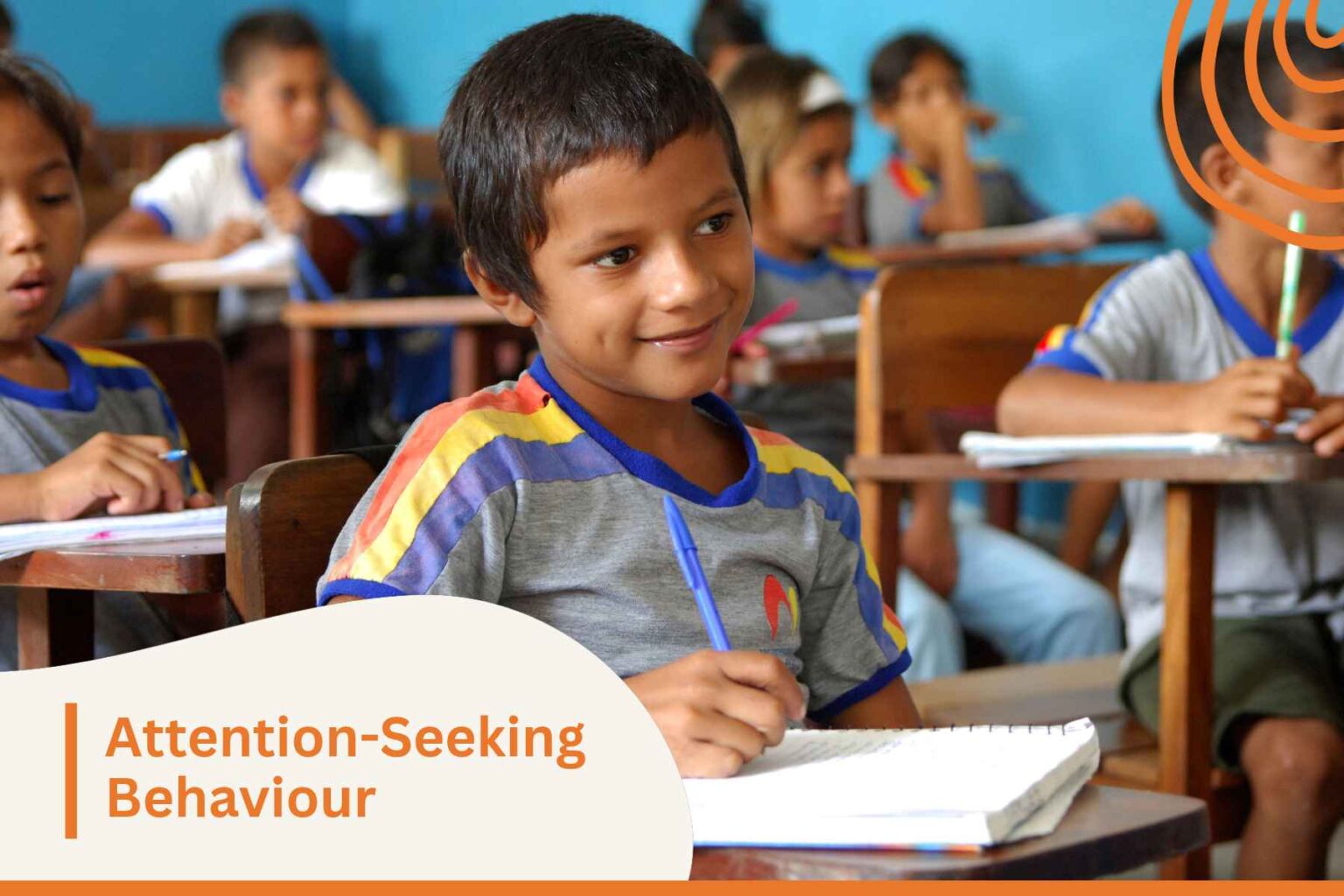
Attention-seeking behaviour describes the ways a person seeks interaction, recognition or a response from others. It can include calling out, interrupting conversations, asking the same question again and again, making noises, or doing things that are sure to get noticed.
Seeking attention is a normal and healthy part of human communication. Everyone needs connection, interaction and acknowledgement. For some people, though, the way they look for attention becomes frequent, disruptive or linked to behaviours that raise safety concerns.
For people with disability, attention-seeking behaviour is often connected to communication, social connection, emotions or the way the people around them respond. Understanding these factors comes first, before deciding whether a behaviour is a concern and how best to support it.
What does attention-seeking behaviour look like?
Attention-seeking behaviour varies a lot from person to person. Examples include:
- Calling someone’s name over and over or asking for their attention
- Interrupting conversations or activities
- Asking the same question repeatedly, even after getting an answer
- Making noises or calling out to get a response
- Following someone around or approaching them again and again
- Touching or tapping someone to start an interaction
- Acting up when others are busy, such as on the phone or with a sibling
- Looking for reassurance or acknowledgement many times a day
- Behaviours of concern that are usually followed by more interaction from others
None of these automatically means a person is seeking attention. The same action can have very different reasons depending on the person and the situation, which is why HHBS practitioners look at the behaviour where it happens, at home, at kinder or school, or in a SIL house, before drawing any conclusions.
Why does attention-seeking behaviour happen?
There’s no single reason. Communication, social experiences, emotional needs, the environment and past interactions all play a part.
Communication
Some people find it hard to communicate their needs, start a conversation or express themselves in ways others easily understand. A person with limited speech might call out, approach someone repeatedly or use physical actions to get interaction. When communicating is hard, whatever gets a response quickly becomes an important way of being noticed.
Through ABA therapy, HHBS therapists teach clearer, easier ways to ask for time, help or company, using words, signs, pictures or a device, so the person gets the connection they’re after without needing to escalate.
Social connection
People naturally seek relationships. Someone with few chances to connect with others, who spends long periods alone or has little access to activities they enjoy, may seek attention more often. In these situations, the behaviour usually reflects a real need for interaction rather than an attempt to disrupt.
Emotional reassurance
Attention-seeking behaviour can come from a need for reassurance, recognition or comfort. A person may ask repeated questions, check in often or stay close to someone when they feel unsure, worried or overwhelmed. It can also increase when relationships, routines or support arrangements change.
Choice and control
Some people have few chances to make decisions about their day. Repeatedly seeking attention may be their way of showing a preference, asking for help or trying to influence what happens next. Building in more chances to make choices often makes a real difference.
The environment
The environment shapes when attention-seeking behaviour happens. Common factors include:
- Long stretches without social interaction
- Few meaningful activities to do
- Changes in support arrangements
- Unfamiliar people or places
- Different people responding in different ways
- Attention that mostly comes after a behaviour escalates
- Difficulty getting to preferred activities or social opportunities
Noticing when the behaviour happens and how people respond helps reveal the patterns that matter for each person.
Attention-seeking behaviour in children
Children seek attention as a natural part of their social, emotional and communication development. They call out, interrupt, ask questions and look for reassurance while they learn how to interact with others.
For children with disability or developmental differences, communication, social needs and chances to take part all influence how they seek attention. The aim is to tell the difference between everyday requests for interaction and patterns that are affecting learning, relationships or daily life.
For young children, HHBS therapists work at home and, with the educators’ agreement, at kinder or childcare, often through early childhood intervention. Common goals include playing independently for a little longer, waiting for a turn to talk, and having a simple way to ask a parent for time together.
Attention-seeking behaviour in adults
Adults need connection and acknowledgement too, and attention-seeking behaviour isn’t limited to childhood. For adults with disability, it often shows up when chances for meaningful interaction are limited, or when their communication and support needs aren’t being recognised.
For example, an adult may repeatedly approach support workers, interrupt activities or call out when they need help or want company. Understanding the person’s circumstances and what the behaviour is doing for them is far more useful than making assumptions based on their age. HHBS supports adults at home and in SIL, working with family, house staff and support workers to build in more meaningful connection across the day.
Is attention-seeking behaviour deliberate?
The term “attention-seeking” can sound as if someone is deliberately being disruptive or manipulative. In reality, a person may be communicating a need, responding to their environment, or repeating something that has brought them interaction before.
In behaviour support, attention is understood as a form of social reinforcement. If a behaviour regularly leads to someone talking to the person, coming over or engaging with them, that response can make the behaviour more likely to happen again. You can read more about how this works in our guide to positive reinforcement.
Giving people attention is a good thing, and connection matters. The purpose of assessment is to understand the pattern, meet the person’s underlying needs and help them get attention in ways that work well for everyone. The Victorian Government’s Behaviour Support Plan Toolkit includes attention as one of the possible functions considered when assessing behaviours of concern.
When does attention-seeking behaviour become a concern?
Attention-seeking behaviour may need further assessment when it:
- Happens very often or is becoming more intense
- Interrupts learning, work or everyday activities
- Strains relationships or social situations
- Involves aggression, property damage or self-injury
- Creates safety concerns for the person or others
- Seems to be the person’s main way of communicating important needs
- Limits independence or community participation
The impact matters more than how often someone asks for attention. A person who seeks interaction often may not need behaviour support at all if their needs are being met, while a less frequent behaviour may need attention if it carries a risk of injury.
What is the function of attention-seeking behaviour?
In Positive Behaviour Support, attention is one possible function of behaviour. A functional behaviour assessment looks at whether a person’s actions are shaped by the responses they get from others. A behaviour may continue because it results in:
- Someone talking to them
- Physical contact or reassurance
- Help with an activity
- Time with other people
- A response from a support worker, family member or peer
Attention can come through positive interactions, like conversation and praise, or through correction and conflict, and both can keep a behaviour going. Not every behaviour that attracts attention is about attention, though. A person might be communicating discomfort, trying to get out of a hard task, asking for something they need or responding to sensory input. The NICE guideline on challenging behaviour and learning disabilities recommends functional assessment to identify what triggers and maintains behaviour, including what happens afterwards.
How is attention-seeking behaviour assessed?
An assessment works out whether social attention is part of the picture, and what else might be involved. It may consider:
- How the person communicates and what they prefer
- Their chances for social interaction and meaningful activity
- Their relationships and support arrangements
- When and where the behaviour happens
- What happens just before
- How others respond during and after
- Whether it happens when the person is alone or with others
- How often, how intense and how much impact it has
- Possible health, emotional, sensory or environmental factors
At HHBS, practitioners gather this through observation at home, school or work, conversations with the person and the people who know them best, and relevant health and support records. The person’s own perspective and quality of life are always part of the picture, and the findings go into a plan written in plain language that families, teachers and support workers can follow.
Attention-seeking behaviour and Positive Behaviour Support
Positive Behaviour Support (PBS) focuses on understanding behaviour, addressing what’s behind it and improving a person’s quality of life. When attention is part of the picture, HHBS practitioners build support around how the person communicates and connects, which may include:
- Teaching clear ways to ask for interaction, help or a break
- Building more meaningful social contact into the day
- More access to activities the person enjoys
- Skills for playing or working independently for longer
- Adjusting routines and surroundings that contribute to the behaviour
- Coaching family, teachers and support workers to give attention freely and consistently, especially when things are going well
The goal is for every person to have plenty of connection and easy, reliable ways to get it. HHBS mobile behaviour therapists do this work at home, kinder, school and SIL houses across Melbourne’s north, west, east and south-east.
Attention-seeking behaviour sometimes happens alongside argumentative behaviour, verbal aggression, defiant behaviour, physical aggression or self-injurious behaviour.
This article is general information, not a diagnosis or an individual behaviour assessment. If a behaviour creates safety concerns or changes significantly, seek professional advice. If someone is in immediate danger, call